Your agent is the operating system now
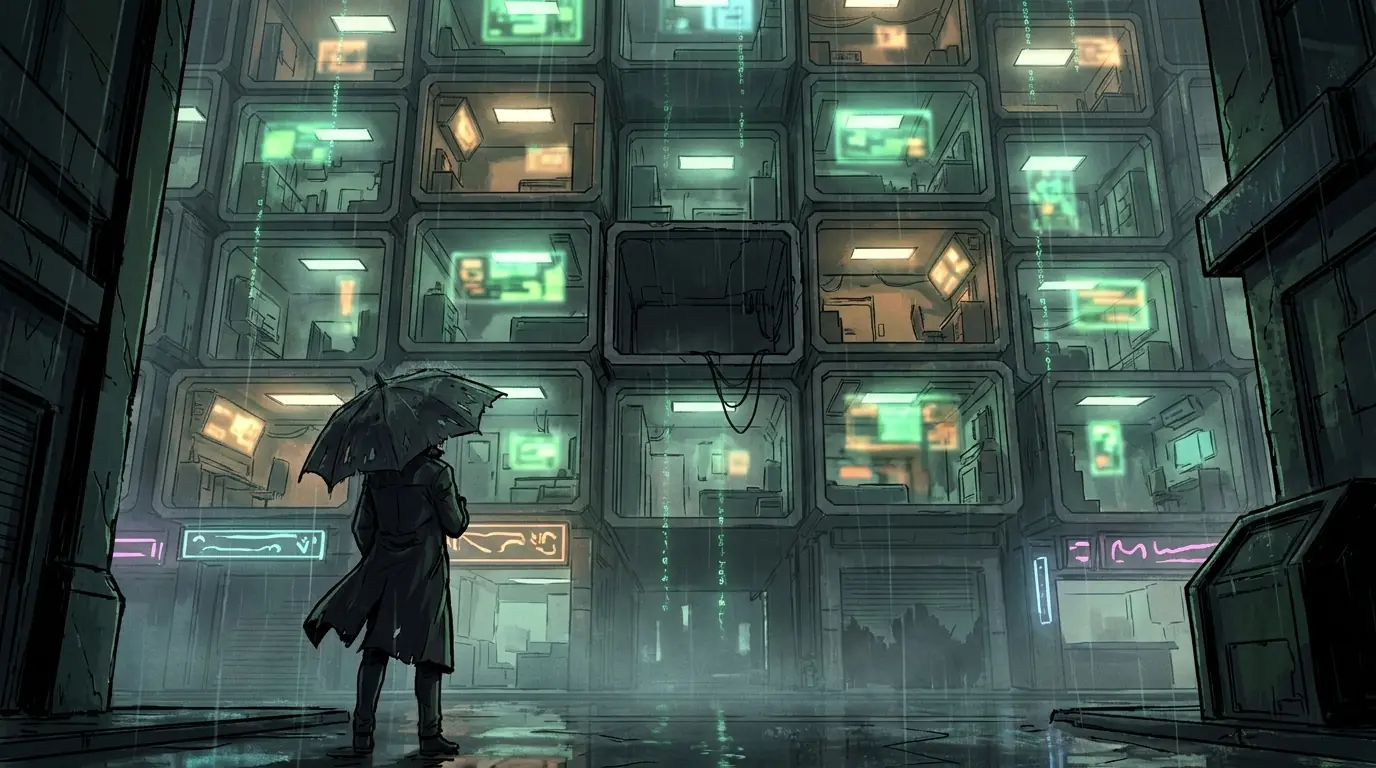
I feel like every dev I know and their grandmas have written their own AI assistant, so I decided to write my own: Clawdia. I'm not alone. 84% of developers already use or plan to use AI tools per Stack Overflow's latest survey, and 51% of organizations have agents running in production. Building your own assistant went from a moonshot to a weekend project.
But this post isn't about building an assistant. It's about what happened to the architecture when I did.
Clawdia started as one app. Chat, calendar, money tracking, health vitals, news. One codebase, one process, one deploy. And what I realized is that the more I wanted her to do, the more I wanted things separated, so I could edit the money module without touching the calendar module or the news module without breaking the health module. Every new feature made the blast radius of every change bigger. Fixing a chart in the money tab meant rebuilding and restarting the entire system (chat, browser pool, scheduler, everything).
So I ripped it apart. In one day I pulled News, Money, Health and the other modules, all out of the dashboard and turned each into a complete standalone application. Not a component. Not a plugin. An actual app with its own package.json, its own process, its own port. Each one talks to Clawdia's main app through a thin contract, shared storage, a proxy route, but runs on its own. They start on demand, stop when idle, and any one of them can be added, deleted, completely re-written, without the rest of the system noticing.
"Write programs that do one thing and do it well"...
This is not new. Doug McIlroy wrote it down at Bell Labs in 1978: "Write programs that do one thing and do it well. Write programs to work together. Write programs to handle text streams, because that is a universal interface." That's the Unix philosophy, and it's older than most of the people vibe-coding assistants today. I didn't invent the architecture, I was just reminded of it.
"a disheartening state of obesity"...
The architecture that we spent decades forgetting about... Software got fat. McIlroy himself watched it happen and didn't hide his disgust: "adoring admirers have fed Linux goodies to a disheartening state of obesity." The man page that used to be a page became a small book. Every app grew a settings screen, a plugin system, an account, a billing tier, a mobile app, an AI feature bolted on last quarter. We stopped shipping programs that did one thing and started shipping platforms that did everything badly. The pipe got buried under a UI, and the universal interface — plain text, readable by anything — got replaced with a hundred proprietary APIs that only talk to themselves.
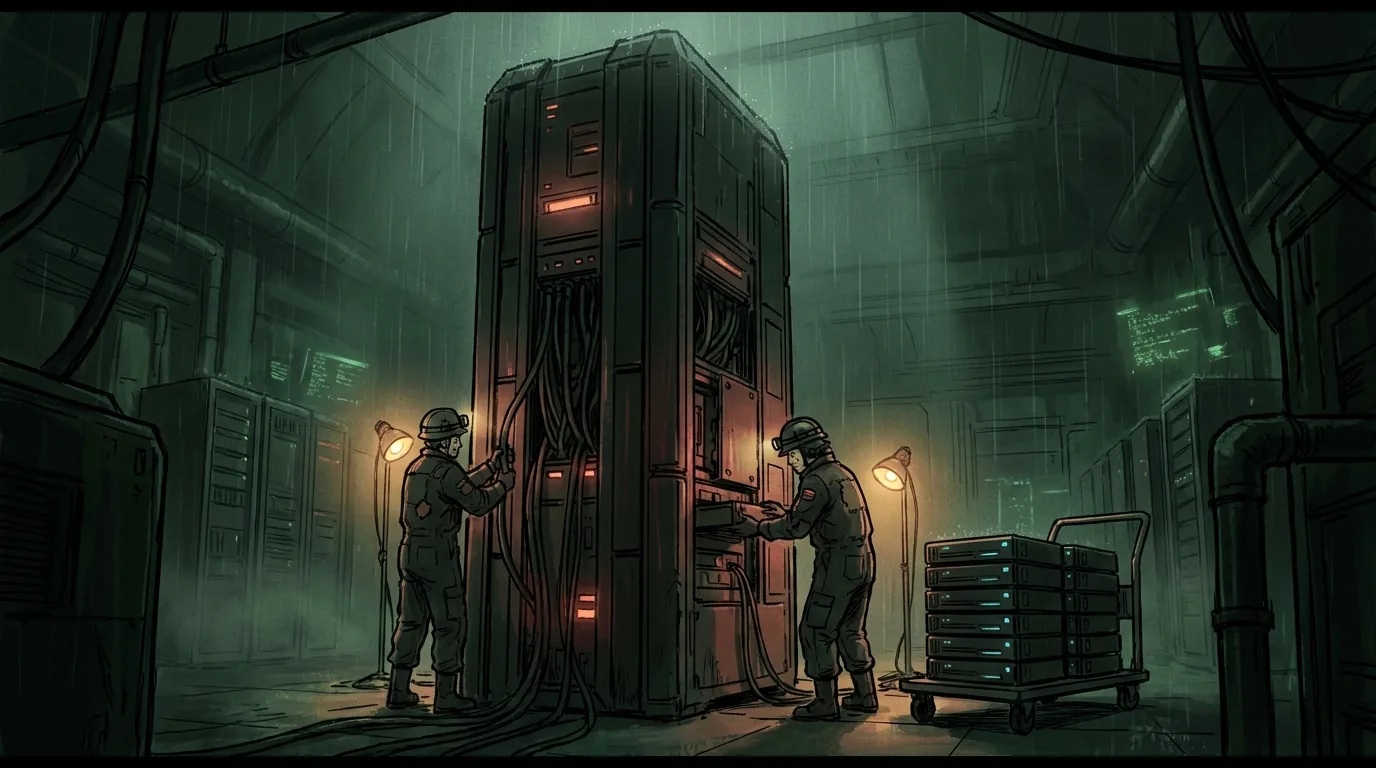
Which is exactly why the Unix idea is sneaking back in through the side door marked "AI." MCP is the pipe, rebuilt for agents. A tool exposes what it does, the agent composes it with the others, and nothing has to know who it's talking to — same contract, same ignorance-as-a-feature that made pipes work. The universal interface stopped being text streams and became language, the one format every model and every human already speaks. My money app doesn't know the health app exists. It doesn't need to. Clawdia is the shell, MCP is the pipe, and each sub-app is a small program that does one thing well. McIlroy described my whole stack in three sentences before I was born — I just spent a weekend rediscovering it and thinking I was clever.
"reduced our infrastructure cost by over 90%"...
The funny thing is the industry just spent five years running the other direction. In 2023, Amazon Prime Video's team published that they "reduced our infrastructure cost by over 90%" after moving their monitoring service from microservices to a monolith. DHH had been saying it since 2016 — Basecamp runs six platforms on one majestic monolith with 12 programmers. Shopify looked at its 6,000 Ruby classes, considered microservices, and chose a modular monolith instead because crossing the network on every call adds latency and failure states. The pendulum had swung hard back to the monolith, and the microservice true believers went quiet.
They were right...
...for humans! Microservices died for small teams because the orchestration cost landed on people. Someone has to maintain the deploy pipelines, trace the failures across service boundaries, keep the contracts in sync. At 12 programmers, that someone is you, every day.
But an agent doesn't pay that cost the way you do.
Clawdia is the orchestration layer. She starts the money app when I open it, reads its output through a shared contract, restarts it when it wedges, and files the log when it doesn't. The exact overhead that made microservices miserable for a 12-person team is now the assistant's job description.
"Excel is an agent to my Copilot, Word is an agent"...
Satya Nadella saw this coming in December 2024, when he said SaaS applications will collapse in the agent era: "the business logic is all going to these AI agents." His version of the future: "Excel is an agent to my Copilot, Word is an agent." The application stops being the product. It becomes a process the agent starts, uses and stops. And the plumbing for that already exists: MCP launched in November 2024 with roughly a hundred servers, and a year later had grown into thousands, with 97 million monthly SDK downloads and backing from Anthropic, OpenAI, Google, and Microsoft. Gartner says agentic AI will sit inside 33% of enterprise software by 2028, up from less than 1% in 2024.
So here's what a SaaS actually turns into once agents are the users instead of people. Think about what an operating system does: it runs processes, schedules them, keeps them isolated, and gives them a syscall layer to talk through. That's exactly what my assistant does with her sub-apps (she runs them, schedules them, isolates them, and gives them MCP to talk through). The assistant is the operating system, and each SaaS is just a process running on it.
And that's the big shift in the industry. Every SaaS that survives the shift has to make one move: expose its modules, publish its contract, and let the agent be the shell instead of the UI. The ones that refuse end up exactly where Nadella pointed — the business logic drains out into the agents, and all that's left is a database with a UI nobody opens, waiting for an agent to CRUD it directly.

Geoffrey Litt predicted the demand side back in March 2023: LLMs mean businesses build custom software in-house instead of buying SaaS off the shelf, because tailored software is suddenly cheaper than subscriptions.
Clawdia is the proof: she replaced my news reader, my budgeting dashboard, my e-book app, my planner and many other subscriptions I no longer shop for. Modules I can rewrite on a whim and completely tailored to what I need and want. My money app is maybe 2,000 lines. It does exactly what I want and nothing else, and when I want it to do something different, I tell my kernel/agent and she rewrites the process.
The microservice renaissance isn't coming back for the enterprises that abandoned it. It's coming back for individuals — one person, one agent, a dozen small programs that do one thing well. McIlroy would recognize it instantly. We just swapped text streams for tokens!
References:
- Stack Overflow Developer Survey 2025 — AI section (Stack Overflow)
- State of AI Agents report — 51% in production, 78% planning (LangChain)
- Introducing the Model Context Protocol (Anthropic)
- Everything your team needs to know about MCP in 2026 — 97M monthly SDK downloads, four-vendor backing (WorkOS)
- Satya Nadella on business apps collapsing in the agent era — BG2 podcast w/ Bill Gurley & Brad Gerstner, Dec 12 2024 (BG2Pod)
- Scaling up the Prime Video monitoring service and reducing costs by 90% (Prime Video Tech)
- Deconstructing the Monolith (Shopify Engineering)
- The Majestic Monolith (DHH, Signal v. Noise)
- Unix philosophy — McIlroy, Kernighan & Pike (Wikipedia)
- Malleable software in the age of LLMs (Geoffrey Litt)
- Gartner predicts 33% of enterprise software will include agentic AI by 2028, up from less than 1% in 2024 (Gartner, Jun 25 2025)