The SaaSpocalypse Got the Target Wrong
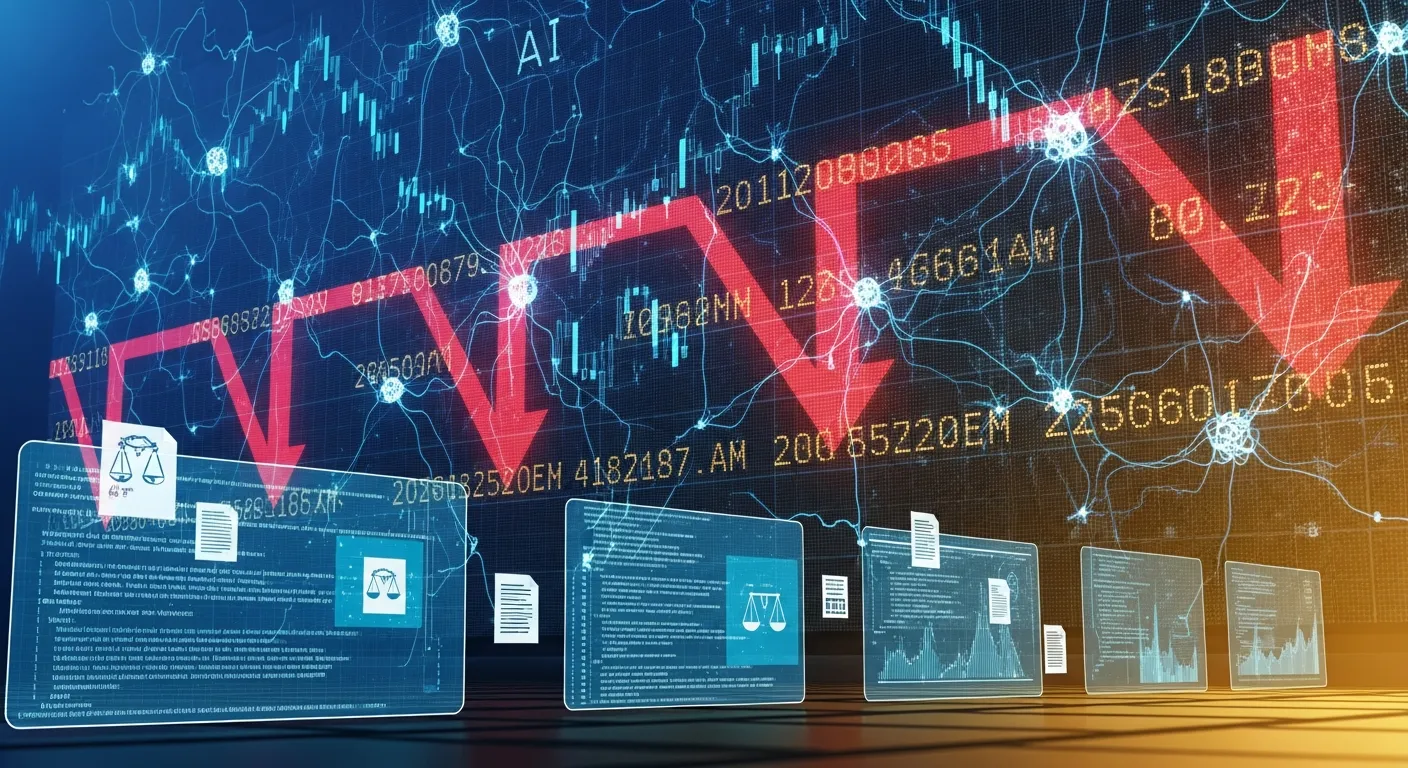
Mustafa Suleyman told Fortune today that most white-collar work will be automated within 18 months. Ten days ago, Anthropic launched Claude Cowork and wiped $285 billion off software stocks in a single trading session. Thomson Reuters dropped 16%. RELX fell 14%. LegalZoom cratered 20%.
If you're a senior engineer watching this unfold, here's the part nobody's saying out loud: the market is panicking about the right trend but betting against the wrong companies.
What Actually Happened with Claude Cowork
On January 31, Anthropic shipped specialized plugins for Claude Cowork — industry-specific automation for legal, finance, sales, and marketing workflows. Not a chatbot. Not a copilot. An agent that reads your files, organizes your folders, drafts your documents, and executes multi-step tasks autonomously.
Wall Street's reaction was immediate: dump anything that sells knowledge work as a subscription. Thomson Reuters, Wolters Kluwer, RELX — companies that charge thousands per seat for specialized research tools — got hammered. The iShares Expanded Tech Software ETF recorded losses not seen since 2008.
Barclays analyst Nick Dempsey called it "sentiment driven." He's partially right. But the sentiment is pointing at something real, even if the timing is off.
Why the Market Got It Backwards
Here's the disconnect: Claude Cowork doesn't replace Thomson Reuters. It replaces the junior analyst who uses Thomson Reuters.
The data moats these companies built over decades — case law databases, regulatory filings, financial datasets — aren't going anywhere. What's changing is who needs to access them and how. Instead of 50 associates manually searching LexisNexis, you need 5 associates supervising AI agents that search LexisNexis.
The real casualties aren't the data platforms. They're the seats. The per-user license model that enterprise SaaS has been built on since Salesforce invented it.
This is the actual SaaSpocalypse: not that SaaS products become obsolete, but that the number of humans who need a login drops by 60-80%. Same data, same tools, fewer seats. Revenue compression without product death.
The Suleyman Timeline Is Wrong, But the Direction Isn't
Suleyman's "18 months" prediction for full white-collar automation is the kind of thing that sounds bold in a Fortune interview and absurd in a sprint planning meeting. Anyone who's shipped production software knows the gap between "demo works" and "enterprise-ready" is measured in years, not months.
But strip away the timeline hype and the signal is clear: Claude Cowork isn't a research preview anymore. It's a product. With plugins. And industry-specific workflows. Anthropic is building the operating system for knowledge work, not just the model.
Combined with Perplexity's Model Council — which now runs Claude, GPT-5.2, and Gemini 3 in parallel to cross-validate answers — we're watching the infrastructure for AI-native professional tools get built in real time.
What This Actually Means for Engineers
Here's where it gets personal. Suleyman specifically called out software engineering as an early indicator of this automation trend. And yeah, junior coding roles face 60-70% automation potential for routine tasks. But the METR study from last year still stands: experienced developers are 19% slower with AI tools on tasks they know deeply.
The gap between "AI can write code" and "AI can architect systems" is enormous. Three things that aren't getting automated anytime soon:
1. System design under constraints. AI can generate a microservice. It can't decide whether your team should use microservices in the first place, given your deployment timeline, your team's skill distribution, and your company's on-call rotation.
2. Cross-domain judgment. When your Temporal workflow orchestration fails because of a pod scaling decision made by infrastructure — that's a human debugging problem. It requires understanding the interaction between systems that were never designed to be understood together.
3. Stakeholder translation. Explaining to product why the "simple feature" requires a database migration that takes the system offline for 30 minutes during business hours. This is the work. And AI can't do it because it requires organizational context that doesn't exist in any training dataset.
The engineers who are vulnerable aren't the ones writing code. They're the ones whose entire job is writing code that someone else designed.
The Investment Signal Nobody's Talking About
Today's CPI came in cooler than expected — 2.4% annualized vs. the 2.5% forecast. Two-year Treasury yields dropped toward their lowest since 2022. Rate cuts are back on the table.
Here's why that matters for the AI story: cheaper capital means more runway for AI infrastructure buildout. Samsung's HBM4 shipments, Meta's $10B data center, the 30,700 tech jobs cut globally in the first two months of 2026 — this is the investment cycle in motion. Companies are spending on compute and cutting humans.
The software stocks that got crushed? Watch the ones that pivot to usage-based pricing instead of per-seat licensing. The companies that figure out "AI-native pricing" — charging for outcomes instead of logins — will eat the ones still selling subscriptions to humans who increasingly don't need them.
Key Takeaways
- The $285B software stock crash wasn't about AI replacing products — it's about AI reducing the number of humans who need access to those products
- Suleyman's 18-month timeline is aggressive, but Claude Cowork's shift from chatbot to autonomous agent with industry plugins is real and shipping now
- Senior engineers who design systems, debug cross-domain failures, and translate between technical and business contexts are not in the blast radius
- Cooler inflation + rate cut expectations = more capital for AI infrastructure spending, which accelerates the entire cycle
- Watch for the per-seat to usage-based pricing transition — that's where the next wave of winners and losers gets decided
References:
- Microsoft AI Chief: White-Collar Work Automated in 18 Months — Fortune
- Anthropic's Claude Cowork Triggers $285B Software Selloff — Yahoo Finance
- Thomson Reuters, RELX Stocks Crushed After Anthropic Legal Plugin — Morningstar
- S&P 500 Market Data, February 13, 2026 — 24/7 Wall St.
- Perplexity Launches Model Council — Perplexity Blog