My agent helped me land a new job. Here's how
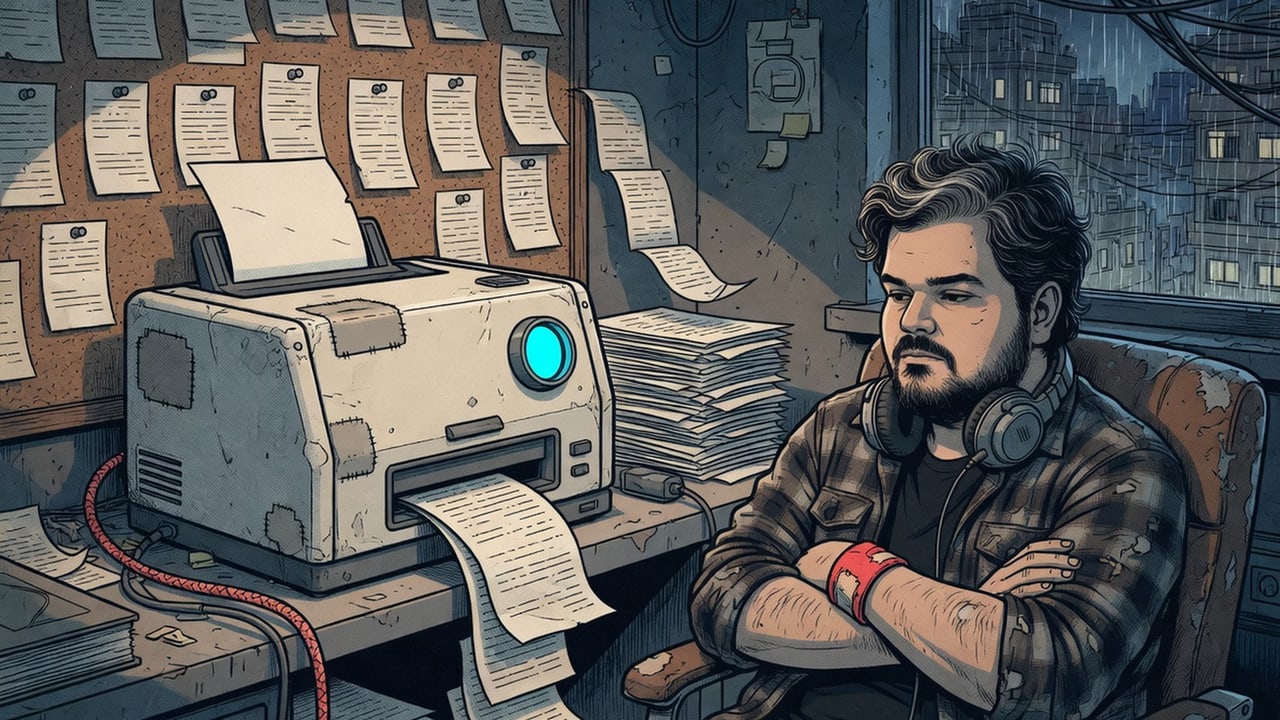
My AI agent helped me land a new job last month!
Back in June I started working on my career goals and my expectations for the future and, as part of that, I decided to move on to a new job. So, of course, I sent my AI agent, Clawdia, on a search for the roles I was looking for.
Clawdia ran daily looking for the "best jobs" for me. By mid-August she had found 93 verified openings for me...
... But I turned out to be a bottleneck to my own job search. I think applying for jobs is such a boring and cumbersome task that I simply didn't apply to many jobs.
So, we had to come up with a new strategy and that's where Clawdia really shined. My goal has been to get "known out-there" (not famous but become a name that comes to mind when looking for AI/Agents engineer) and, with that, get the recruiters to come to me, instead of me blindly applying to positions that wouldn't reply to me anyway.
My plan had a 3 fold strategy:
- Personal website and products: Invest in my "own branding" was the first step. I revamped my personal website and started posting in it at least once a month. Also, Clawdia and I, started an aggressive SEO and AEO strategy to increase the reachability of my products, MakingFriends.app and CookingWithRobots.com
- Blog posts and LinkedIn posts: Clawdia comes up with suggestions for my blog posts, this one included. And I write the post. Once the post is done, Clawdia helps me summarize it for LinkedIn. This way I get the LinkedIn views + some traffic to my own website.
- Watch and adapt: in the past few months I got from 0 to 600 views monthly on CookingWithRobots.com. That's not a super-high number, but it's still 600 views more than I had before. The strategy here was to track everything. Any number that could turn into a lead is tracked and I change the product and marketing/SEO/AEO accordingly. That's valid for all 3 products (CookingWithRobots.com, MakingFriends.app and, my personal website, nate.lemos.dev).
The goal of this plan was to have "some relevance" in searches and to start showing up organically on recruiters' (and developers') LinkedIn's.
The LinkedIn revamp
I applied the same ideas I used for my websites with my LinkedIn profile. I asked Clawdia to go on Google, ChatGPT, Grok, etc and search for terms that I would look for if I wanted to hire someone like me. "AI engineer", "Prompt engineer", "Agent builder", etc... Any of the new hyped terms, as well as niche specific ones: "Senior software engineer with 10+ years of experience", ".Net Core full stack engineer", "Developer with migration experience", etc.
With those results, Clawdia analyzed my LinkedIn and previous experiences and composed a better profile for me and together we copied and adapted what worked from her research into my own LinkedIn. So, instead of "Software Engineer at xx", I became "AI / Agent Engineer · I build tool-using AI systems on real data · Claude + MCP · 12+ yrs at scale" and my "About" section became much more concise and result based.
What worked for the top results in Google searches, ChatGPT, etc, should probably work for me, right?
Kinda...
Posting regularly
Clawdia drafts the ideas, and I write the posts
The next step, and this one is the most important one, was to post regularly, so my name was always showing up out there.
Since Clawdia has a lot of context about me and about my job search, I let her do research on trends and news and come up with ideas that would be pertinent for my blog posts. Not gonna lie, most of them are mediocre. But some are good. And those are the ones I take and invest time on (this post, for example).
It's not that Clawdia writes the whole post for me. She comes up with topics and key-points and I expand on that. At the end of the day, Clawdia drafts the ideas, and I write the posts.
My first post was about my wife building an app using AI, never having written a line of code. Six reactions! Not exactly viral. I kept going anyway...
From there to more than 3k impressions after a couple of posts. I found that persistence was the key.
Here's the thing about LinkedIn. It has over 1.3 billion members and only about 3% post more than once a week, while more than 40 million apply for jobs every week. Forty million people standing in line, and almost nobody talking. You don't need to go viral. You just need to be one of the few people actually saying something!

"real recruiters with real positions"...
From there, the rest was just waiting. And it didn't take long to start getting real recruiters with real positions reaching out. Again, real positions, not the scam ones that we all know about.
I got my first interview in less than a month, in two months I had a new job, I had a conference reaching out for me to speak at it... And all of that with a couple of changes to how I approached LinkedIn and how I decided to "rebrand myself".
I'm not saying that those recruiters reached out because they read my spectacular posts and that I'm a great writer. Far from that, but that's how I showed up in someone's feed, and showing up in the feed is how you end up in their inbox.
So here's the lesson learned from this journey
Use an agent that works with you and not for you. Don't delegate the entire process to the agent because that's how you end up with slop. Instead, use something that plans and helps you build, something that knows about you and that has as much context as possible on what you are trying to achieve. And based on that, expand their researches and "ideas" with your own voice, your own intelligence, your own experience.
Especially for anything with your name on it. Blog posts, talks, the LinkedIn post that gets you found.
The agent needs someone steering and that someone is you.
My agent didn't get me the job. She made me findable, the recruiters did the finding, and the voice stayed mine.
That's how you land a dev job in the post-AI era!
References: